Oslo: What to See, Facts & Flights
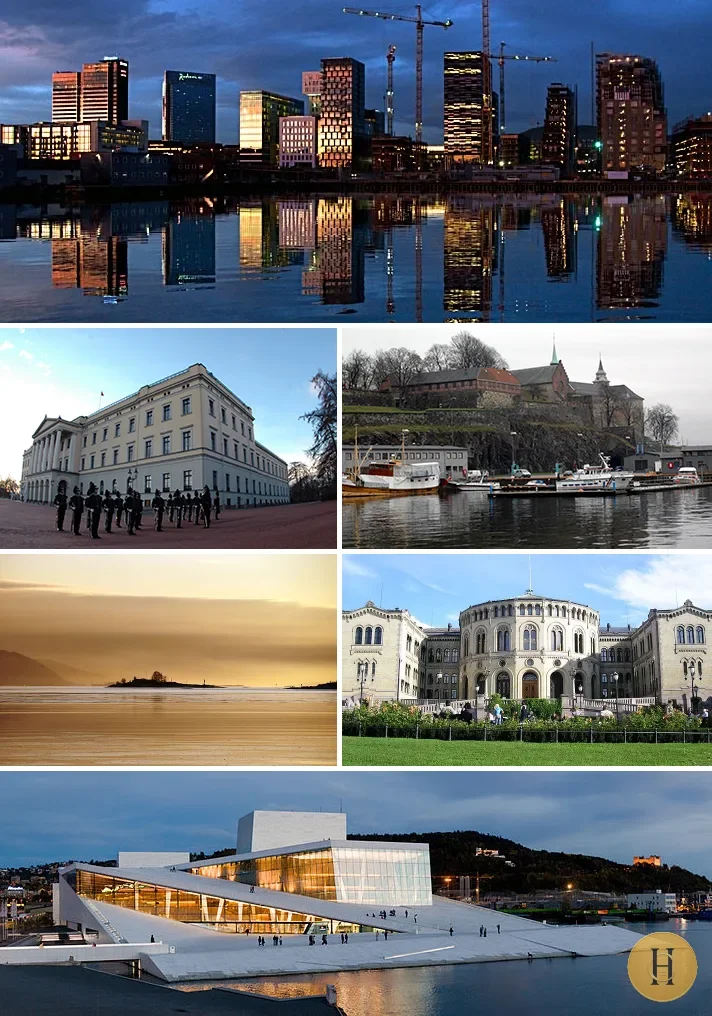
Oslo is the capital of Norway and the political, economic, and cultural center of the country. It is visited for its combination of a compact city, contemporary architecture, and direct access to the nature of the fjords and forests that surround it.
What to see
The main route starts at the Oslo Opera House, a building of white marble and glass whose inclined roof allows you to walk up to the highest point and contemplate the fjord. A few minutes away is Vigeland Park, an outdoor space with more than two hundred sculptures in granite and bronze by Gustav Vigeland, including the famous Monolith and the central fountain.
The Viking Ship Museum houses three funeral vessels from the 9th century, along with sledges and textiles recovered from graves of the era. It is the essential visit to understand the country's maritime past. On Holmenkollen hill, the ski jump offers an observation platform with views of the city and the fjord, plus a small ski museum.
Neighborhoods and how to get around
The historic center is concentrated around Karl Johans gate street, which connects the central station with the Royal Palace. On one side is the Kvadraturen neighborhood, the oldest, with pedestrian streets, galleries, and cafes. On the other, the Grünerløkka neighborhood, east of the Akerselva river, is the trendy area: old factories converted into bars, design shops, and informal restaurants.
The city is easily walked in a day for the central points, but to reach Vigeland Park or the Viking Museum, it is advisable to use the tram or bus. The boat tour through the inner fjord, departing from the pier opposite the town hall, is a practical alternative to see the city from the water and reach some nearby islands.
Eating and nightlife
Local cuisine is based on fish, especially salmon and cod, and game meats such as reindeer or moose. Restaurants in the harbor and Grünerløkka offer seasonal menus with products from the fjord. For something quick, Norwegian sausage stands (pølse) are found throughout the center and are the cheapest option.
Nightlife is concentrated around Torggata street and in the Grünerløkka neighborhood, with craft beer pubs and live music venues. Drink prices are high, so many Norwegians pre-drink before going out. The atmosphere is calm and uncrowded until after midnight, except during summer weekends.
When to go
The best time is from May to September, when temperatures are mild and days are long, with light well into the night. In winter, Oslo becomes a city of snow and sports, with cross-country ski trails in Holmenkollen park itself and Christmas markets, but the cold and darkness limit outdoor visits.
If you travel in summer, keep in mind that many Norwegians go on vacation in July and some restaurants close for weeks. June and August are the most balanced months between climate and activity.
- Oslo Opera House: Marble and glass building with a walkable roof and fjord views.
- Vigeland Park: Outdoor sculptures by Gustav Vigeland, with more than two hundred pieces.
- Viking Ship Museum: Three funeral ships from the 9th century and objects from the Viking era.
- Holmenkollen Ski Jump: Ski jump with observation platform and ski museum.
- Karl Johans gate: Main street connecting the central station with the Royal Palace.
Frequently asked questions
How much time is needed to see the main sights?
Two full days are sufficient to visit the Opera, Vigeland Park, the Viking Ship Museum, and the Holmenkollen ski jump, provided public transport is used for the more distant points.
Is eating in Oslo expensive?
Yes, sit-down restaurants are expensive, with menu prices far above the European average. The alternative is shopping in supermarkets or using street stalls, which are considerably cheaper.