Rome: What to See, Facts & Flights
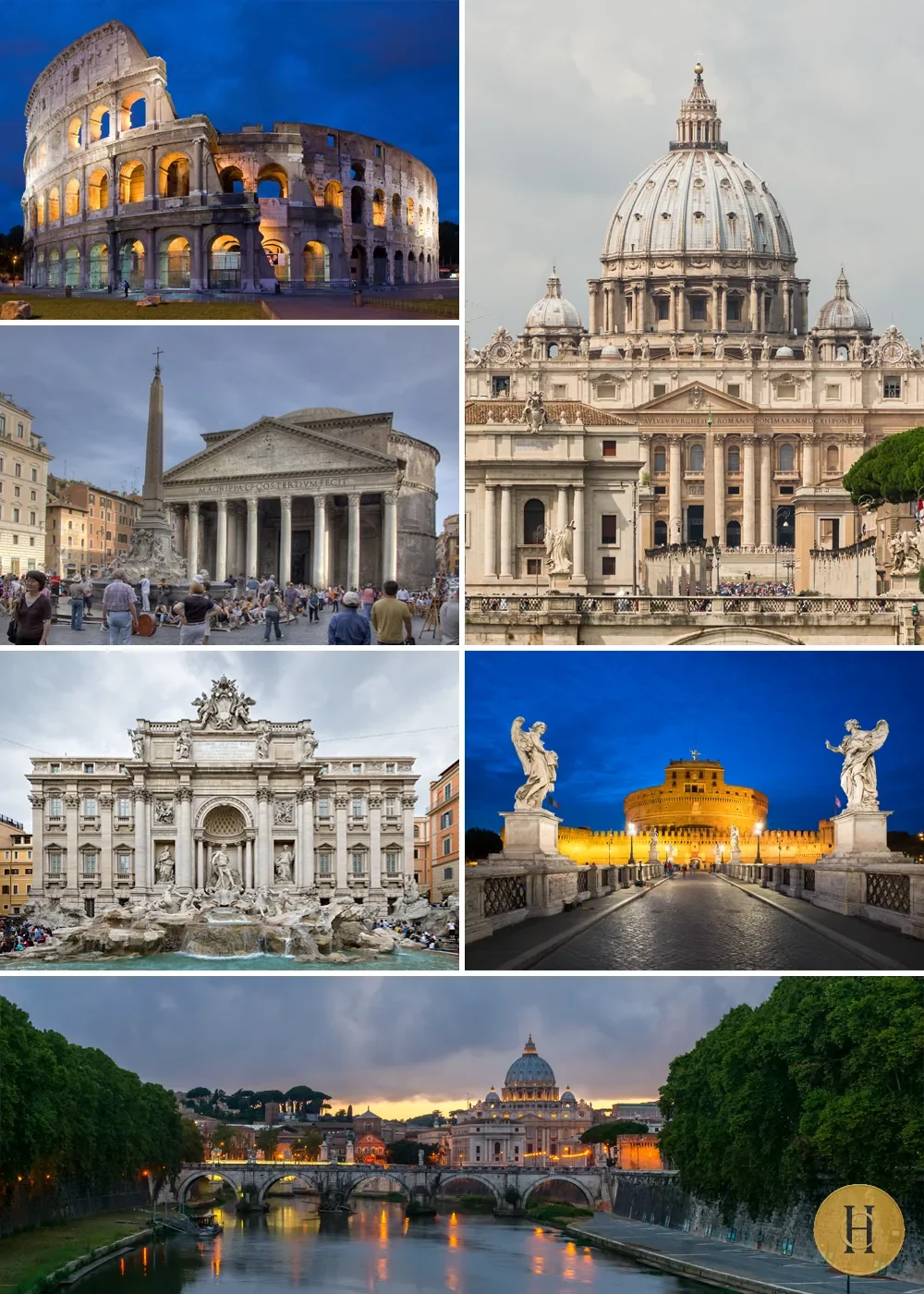
Rome is the capital of Italy and one of the cities with the highest concentration of history and art in the world. People travel there to explore the remains of the Roman Empire, admire Renaissance masterpieces, and experience vibrant urban life around its squares and fountains.
What to see
The monumental core is concentrated in the historic center. The Colosseum and the Roman Forum form an essential archaeological complex that can be explored on foot in a morning. A few minutes away, the Pantheon surprises with its original dome and state of preservation, while the Fontana di Trevi, always crowded, is the mandatory stop for tossing a coin.
Vatican City, although it is an independent state, is visited from Rome. St. Peter's Basilica and the Vatican Museums, including the Sistine Chapel, attract the largest number of visitors in the city, so it is advisable to start early or book in advance.
Neighborhoods and how to get around
The historic center is divided into clearly differentiated areas. Trastevere, on the other side of the Tiber, retains an atmosphere of narrow streets and squares with terraces, ideal for strolling at sunset. The Monti neighborhood, next to the Colosseum, is quieter and features independent shops. The area around Piazza Navona and Campo de’ Fiori has the highest density of restaurants and tourist activity.
The city is best explored on foot in its core, but distances between the Vatican and the Colosseum are long. The metro, with two main lines, connects key points, and city buses cover the rest. Avoid driving in the center: limited traffic zones and expensive parking make it impractical.
Dining and nightlife
Roman cuisine is hearty and based on simple ingredients: pasta cacio e pepe, amatriciana, or carbonara, along with meats like saltimbocca. To eat well, look for trattorias outside the most touristy streets, where the daily menu is usually cheaper than in the main squares. The Testaccio neighborhood is the reference point for traditional cooking and food markets.
Nightlife is concentrated in Trastevere, with wine bars and live music venues open late. There are also cocktail options in the center, especially around Piazza della Rotonda, although prices are higher. For a local experience, try an aperitivo between 7:00 PM and 9:00 PM, which includes a drink and a snack buffet.
When to go
Spring (April to June) and autumn (September to October) are the best seasons: mild temperatures and fewer crowds than in summer. July and August are hot and busy, but the nights are pleasant. Winter is cold and rainy, although with fewer tourists and lower accommodation prices. Avoid Holy Week if you don't mind extreme crowds.
- Colosseum – 1st-century AD amphitheater, the icon of Imperial Rome.
- Roman Forum – Ruins of the political and commercial center of the ancient city.
- Pantheon – Roman temple converted into a church, featuring the largest unreinforced concrete dome.
- Fontana di Trevi – 18th-century Baroque fountain, famous for the coin-tossing tradition.
- Vatican City – Independent state housing St. Peter's Basilica and the Vatican Museums.
Frequently asked questions
How many days do you need to see Rome?
With three full days you can see the essentials: the Colosseum and Forum, the Vatican, and the historic center with the Pantheon and Fontana di Trevi. If you want to visit museums calmly or take a day trip, you will need four or five days.
Is it easy to get around by public transport?
Yes, for the main tourist spots. The metro has two lines connecting the Vatican, the Colosseum, and Termini station. Buses complement the network, but traffic jams are frequent. Walking is the best option in the historic center, where distances between monuments are short.