Skopje: sights, info and flights
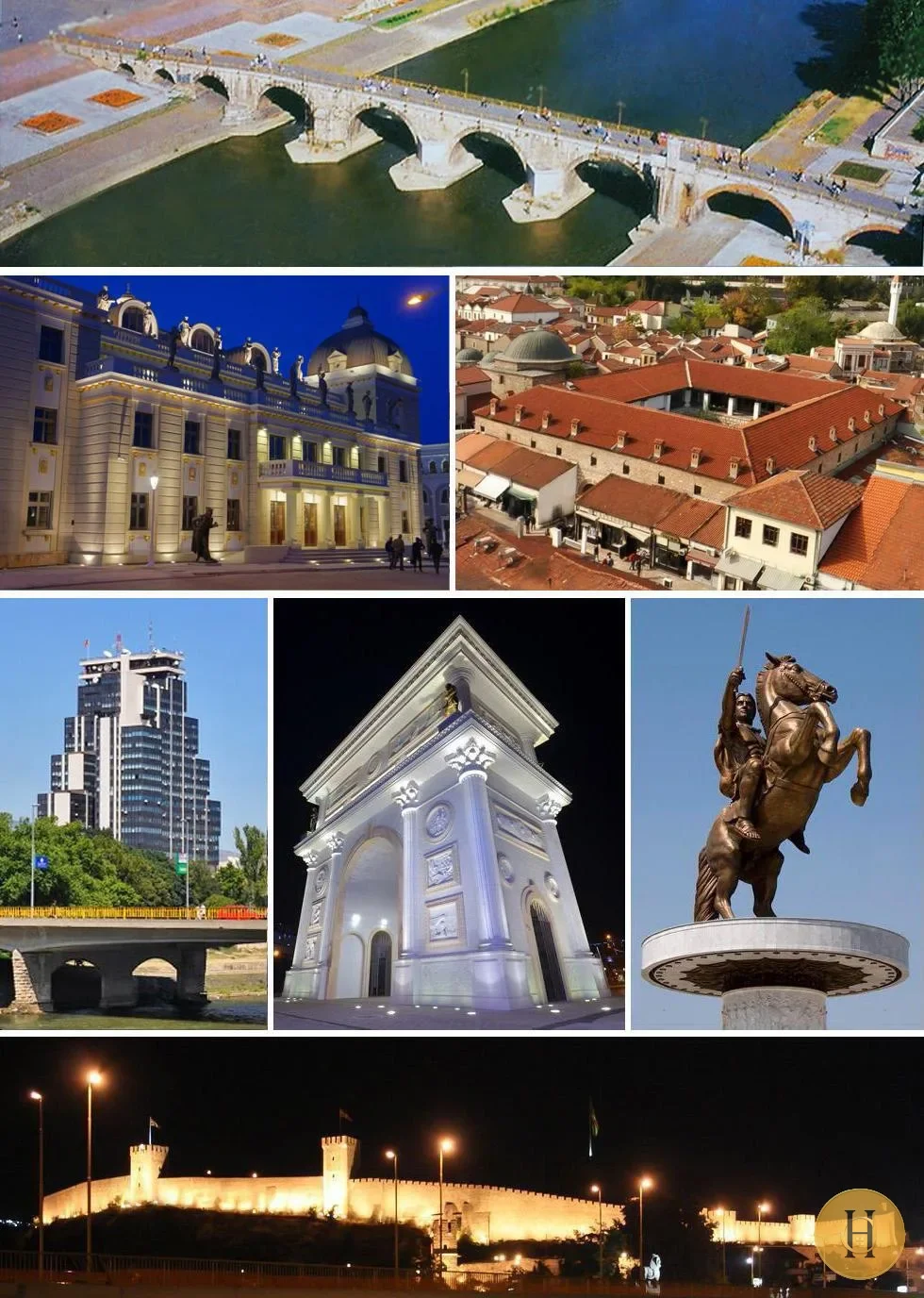
Skopje is the capital of North Macedonia, a city marked by its Ottoman past, its reconstruction after the 1963 earthquake and a present full of contrasts between the old and the new. People travel there for its oriental bazaar, its turbulent history and as a base to explore the Western Balkans.
What to see
The center is organized around the Vardar River. The Stone Bridge, from the 15th century, connects Macedonia Square with the Old Bazaar, a labyrinth of streets with mosques, craft workshops and cafes. On the opposite bank, Kale Fortress dominates the city from a hill, although only remains of walls and towers are left.
Next to the bazaar, the Mother Teresa Memorial House occupies the site where the church in which she was baptized stood. The building, of modern architecture, houses personal objects and panels about her life. A walk along the Vardar embankment shows statues and neoclassical buildings constructed in the "Skopje 2014" project, giving the city the air of a historical theme park.
Neighborhoods and how to get around
The city can be easily explored on foot. The Old Bazaar is pedestrianized and concentrates traditional commercial life, with shops selling copper, carpets and jewelry. Across the bridge, the area around Macedonia Square is the administrative and commercial center, with wide avenues and terraces. The Karpoš neighborhood, to the west, is residential and quiet, with parks and embassies.
To climb to the fortress, you have to take a steep slope from the bazaar; it is worth it for the views of the urban complex and the mountains surrounding the city. Public transport exists, but the points of interest are close enough to walk.
Eating and nightlife
Local cuisine mixes Balkan and Turkish influences. In the bazaar, kebapchinji (grilled minced sausages), ajvar (roasted peppers) and cheese or meat bureks abound. Restaurants in the center offer menus with lamb, grilled vegetables and shopska salad, made with tomato, cucumber and white cheese.
Nightlife is concentrated in the pedestrian streets around Macedonia Square and along the Vardar promenade, where there are bars and clubs open late. Prices are moderate, and it is common for locals to dine late, starting at 9:00 PM. The atmosphere is lively on weekends, with live music in some venues in the bazaar.
When to go
The best time is from April to June and September to October, with mild temperatures and less rain. Summer (July-August) is hot, with highs exceeding 35 °C, but the city remains active. Winter is cold and foggy, although the bazaar and cafes keep their charm. In December, there are Christmas markets in the central square.
- Stone Bridge: Symbol of the city, crosses the Vardar and connects the center with the bazaar.
- Old Bazaar: Pedestrian zone with mosques, craft shops and traditional restaurants.
- Kale Fortress: Remains of a medieval fortification with panoramic views.
- Mother Teresa Memorial House: Museum dedicated to the Nobel laureate, at the site of her baptism.
- Macedonia Square: Monumental center with statues and buildings from the Skopje 2014 project.
Frequently asked questions
Do I need cash or card?
You can pay by card in most hotels, restaurants and shops in the center, but in the bazaar and street stalls it is better to carry cash in Macedonian denars. There are ATMs scattered throughout the city.
How long do you need to see Skopje?
A full day is enough to tour the center, the bazaar, the fortress and Mother Teresa's house. If you want to visit the City Museum or take a trip to Matka Canyon, it is advisable to add one more day.