Vilnius: sights, info and flights
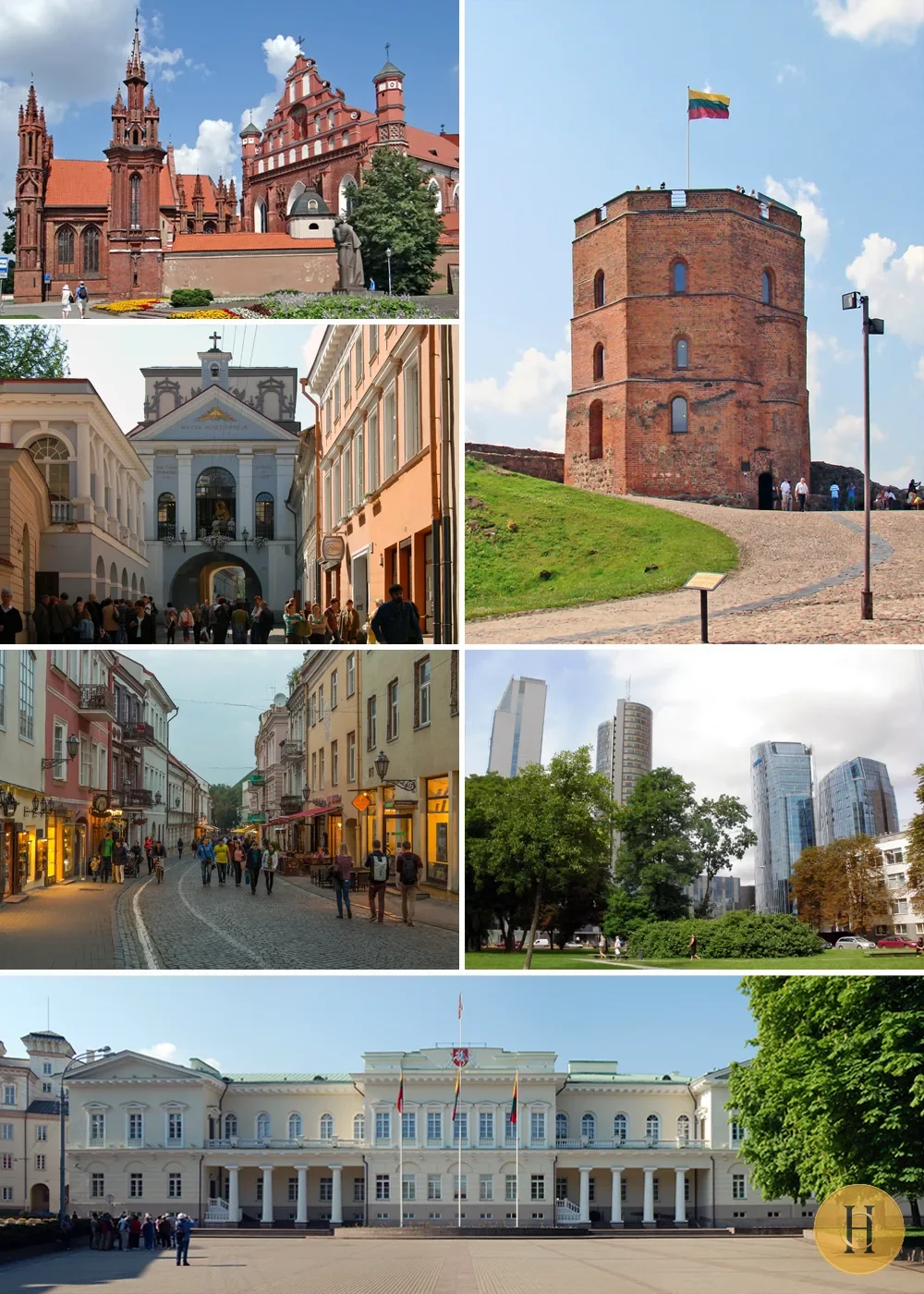
Vilnius is the capital of Lithuania and its main gateway, with around 590,000 inhabitants and an old town declared a World Heritage Site. It is visited for its mix of Baroque architecture, complex history and a young, active cultural scene, all within a compact center that can be easily explored on foot.
What to see
The tour begins at Gediminas Tower, on the hill of the same name, offering views of the red roofs and Baroque churches. Then head down to the Aurora Gate, the only surviving gate of the ancient walls, with its chapel and image of the Virgin which is a pilgrimage site. Between these two points, the Cathedral and its square mark the symbolic center of the city.
Do not miss Saint Anne's Church, an example of late Gothic brickwork, nor the University of Vilnius complex, with several inner courtyards open to visitors. The old town is small, so you can see the essentials in one morning.
Districts and how to get around
The old town is the main area: cobbled streets, squares and an irregular layout that invites wandering. Across the Vilnia river lies Užupis, a self-proclaimed artists' republic with its own constitution, which has become a bohemian district with galleries, cafes and murals. You can cross it via any of its pedestrian bridges.
The city is easily walkable: from the old town to Užupis it takes barely ten minutes. To reach the tower or more distant areas, there are buses and trolleybuses connecting to the center, but they are not necessary for visitors sticking to the main sights.
Museums and theaters
The National Museum of Lithuania, at the base of the tower, explains the country's history from the Middle Ages to independence. For the Soviet period, the Museum of Occupations and Freedom Fights occupies the basements of a former KGB headquarters and is a tough but essential visit to understand 20th-century Lithuania.
In terms of theater, the Lithuanian National Opera and Ballet Theatre offers ballet and opera seasons at moderate prices. There are also alternative venues in Užupis and the old town, although the main offerings are opera and drama in Lithuanian, which may be less appealing to those who do not speak the language.
Eating and nightlife
Local cuisine is based on potatoes, meat and dairy products. The typical dish is cepelinai, potato dumplings filled with meat or cheese, served with sour cream sauce. There are Lithuanian restaurants in the old town, as well as modern and fusion options in Užupis.
Nightlife is concentrated in the old town and on Vokiečių Street, with craft beer bars and pubs. Užupis has a more alternative vibe, with small venues and terraces in summer. Prices are lower than in Western Europe, making going out affordable.
- Gediminas Tower: medieval tower on the hill, with a viewpoint and small history museum.
- Aurora Gate: 16th-century walled gate with a chapel and venerated icon.
- Užupis District: self-proclaimed artistic republic, with its own constitution and bohemian atmosphere.
- Vilnius Cathedral: neoclassical cathedral in the central square, with a detached bell tower.
- Museum of Occupations: former KGB barracks, testimony to Soviet repression.
Frequently asked questions
How many days do you need to see Vilnius?
Two full days are enough for the old town, Užupis, the tower and a couple of museums. If you want to take a trip to Trakai or the island castle, it is advisable to add half a day more.
Is it safe to travel to Vilnius?
Yes, it is a safe city for tourism, with low crime rates in central areas. As in any capital, it is advisable to watch your belongings in crowded places, but there are no specific problems for visitors.