Budapest: sights, facts and flights
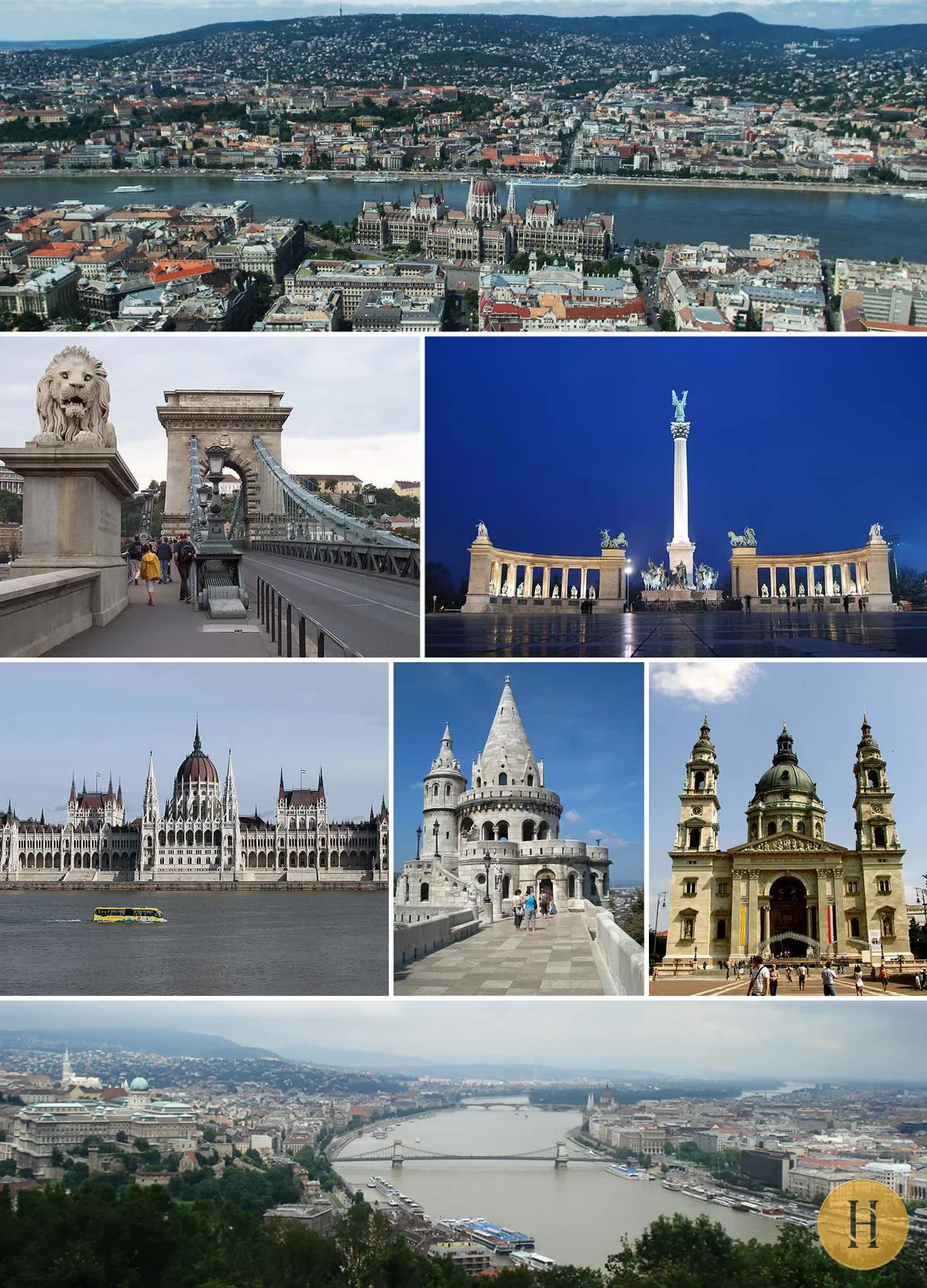
Budapest is the capital of Hungary and the largest city in the country, with an approximate population of 1.7 million inhabitants. People travel there for its monumental architecture, thermal baths and dense cultural life, all spread out on both sides of the Danube.
What to see
The classic route starts at the Parliament, the most photographed building in the city, and continues along the Chain Bridge, which connects central Pest with the Castle district in Buda. On the other side, Fisherman's Bastion offers one of the best views of the river and the city's rooftops.
No less important are the Széchenyi Baths, an open-air thermal complex in City Park. They operate year-round and are a common experience for both tourists and locals, who visit their hot water pools even in winter.
Districts and how to get around
The city is divided into two well-differentiated zones. Buda, to the west, is the upper part, with steep streets, the Castle and the Bastion. Pest, to the east, is the commercial and leisure center, with Andrássy Avenue, the Jewish Quarter and the grand cafés. Crossing the Danube on foot via the Chain Bridge is the most direct way to move between them.
To get around, the metro is practical and covers the main areas. Line 1, the oldest, runs along Andrássy Avenue. Walking is viable in central Pest, where distances between the Parliament, the basilica and the central market are short.
Eating and nightlife
Local cuisine is based on hearty dishes such as goulash, paprika and soups. Markets, like the Great Market Hall, are good places to try cured meats, cheeses and sweets without paying restaurant prices. There is also a strong tradition of historic cafés, with period interiors and pastry service.
Nightlife is concentrated in the Jewish Quarter, where several bars operate in abandoned buildings and inner courtyards. They are known as "ruin bars" and usually feature live music, a young atmosphere and moderate prices. There are also concert halls and theaters, although the offer is more local than international.
When to go
Spring and autumn are the best seasons: mild temperatures, fewer crowds and open terraces. Summer is hot, but the spas and outdoor activities make up for it. Winter is cold, although Christmas markets and thermal baths attract those looking for a city plan with less tourism.
- Parliament: Seat of the Hungarian government, with guided tours inside and a neo-Gothic facade on the Danube.
- Fisherman's Bastion: Viewpoint with towers and colonnades overlooking the river and central Pest.
- Széchenyi Baths: Thermal complex with outdoor and indoor pools, open year-round.
- Chain Bridge: Suspension bridge for pedestrians and traffic connecting Buda and Pest, with lions on its pillars.
- Great Market Hall: Three-story covered market with local products, prepared food and souvenirs.
Frequently asked questions
Can you pay with euros in Budapest?
No, the official currency is the Hungarian forint (HUF). Although some shops in very touristy areas accept euros, the exchange rate is usually unfavorable. It is better to pay by card or withdraw forints at ATMs.
How much time do you need to see the main sights?
With two full days you can see the Parliament, Fisherman's Bastion, cross the Chain Bridge and visit a spa. With three days, you can calmly add the Jewish Quarter and a museum. More time allows for trips to nearby towns, but it is not essential.